Keep Your Vehicle Road-Ready This Summer with Simple Maintenance Tips from Georgia’s Clean Air Force
Georgia's Clean Air Force encourages motorists to take a few minutes now to help prevent breakdowns, improve safety,
Press Release Disclaimer: This is a press release distributed through the XPR Media network. It has not been independently verified by our newsroom.
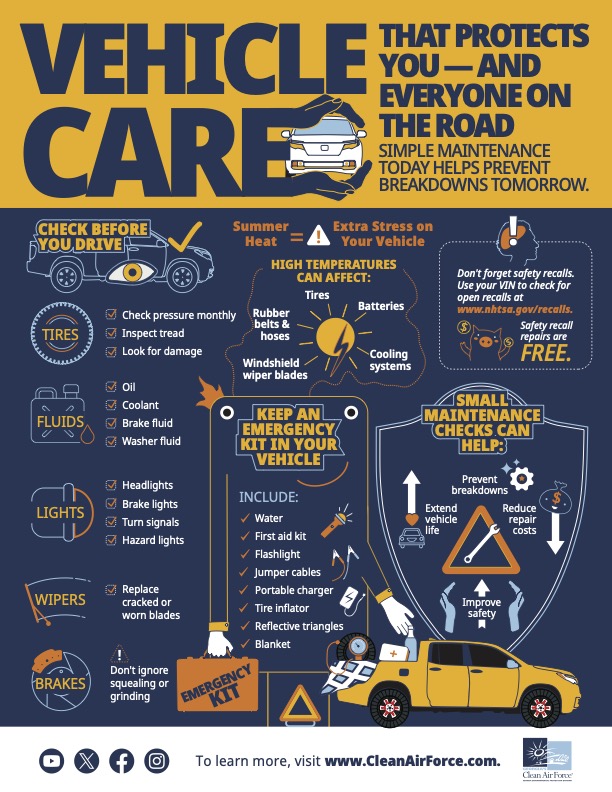

Georgia’s Clean Air Force encourages motorists to take a few minutes now to help prevent breakdowns, improve safety, and protect vehicle performance
Atlanta, GA (PRUnderground) September 18th, 2026
Summer heat can take a toll on both drivers and their vehicles. From high temperatures that strain cooling systems to worn tires and aging rubber components, seasonal conditions can increase the risk of roadside breakdowns and costly repairs.
Georgia’s Clean Air Force (GCAF) encourages motorists to make vehicle maintenance part of their regular routine. A few simple inspections can help improve safety, extend the life of a vehicle, and reduce the chance of unexpected problems while traveling.
“Routine maintenance isn’t just about keeping your vehicle running smoothly–it’s about protecting everyone who shares the road,” said Michael Odom, Manager at Georgia Environmental Protection Division. “Many common issues can be identified early with a few simple checks before they become more expensive or create a safety concern.”
SUMMER VEHICLE CHECKLIST
GCAF recommends motorists inspect the following before daily driving or extended trips:
-
Check your tires.
-
Verify tire pressure monthly while tires are cold.
-
Inspect tread depth and look for uneven wear or visible damage.
-
Don’t forget to inspect your spare tire.
-
Inspect your cooling system.
-
Ensure coolant levels are adequate and follow your manufacturer’s maintenance schedule.
-
Have leaks or overheating concerns addressed promptly.
-
Monitor important fluids.
-
Check engine oil, brake fluid, windshield washer fluid, transmission fluid (when applicable), and power steering fluid.
-
Watch for signs of leaks beneath your vehicle.
-
Test lights and wipers.
-
Confirm headlights, brake lights, turn signals, and hazard lights are working properly.
-
Replace worn windshield wiper blades, especially after periods of extreme heat.
-
Listen to your brakes.
Squealing, grinding, or changes in brake performance should be inspected by a qualified technician.
-
Check for safety recalls.
Vehicle owners should also periodically search for open safety recalls using the National Highway Traffic Safety Administration’s online recall lookup tool by entering their vehicle identification number (VIN) at https://www.nhtsa.gov/recalls. Safety recall repairs are completed at no cost to the vehicle owner.
Be Prepared for the Unexpected
Even well-maintained vehicles can experience emergencies. Keeping a basic roadside emergency kit in your vehicle can help you stay safe while waiting for assistance.
Recommended items include:
-
First aid kit
-
Flashlight with extra batteries
-
Jumper cables
-
Drinking water
-
Non-perishable snacks
-
Portable phone charger or power bank
-
Reflective warning triangles or road flares
-
Tire inflator or repair kit
-
Blanket
-
Basic emergency supplies appropriate for your travel
“Preventive maintenance is one of the easiest ways motorists can improve reliability and reduce stress before hitting the road,” said Michael Odom, Manager at Georgia Environmental Protection Division. “Taking a few minutes today could prevent hours of inconvenience tomorrow.”
For more vehicle care information and emissions testing resources, visit www.cleanairforce.com.
About Georgia’s Clean Air Force
Georgia’s Clean Air Force (GCAF), in partnership with the Environmental Protection Division (EPD), is responsible for the management of the Vehicle Emission Inspection and Maintenance (I/M) Program throughout Atlanta’s 13 metro counties (Cherokee, Clayton, Cobb, Coweta, DeKalb, Douglas, Fayette, Forsyth, Fulton, Gwinnett, Henry, Paulding, and Rockdale). Since 1996, Georgia’s Inspection and Maintenance Program has prevented more than 2.2 million tons of harmful ozone-forming pollutants from entering the air we breathe. The program has also identified and repaired more than 4.8 million heavy-polluting vehicles. For more information, please visit www.cleanairforce.com.